Measurements · By FaceFluent editorial · Published
A measurement published without a band
Midface ratio is easy to calculate and reproducible. We still print no reference range beside it, and that is deliberate.
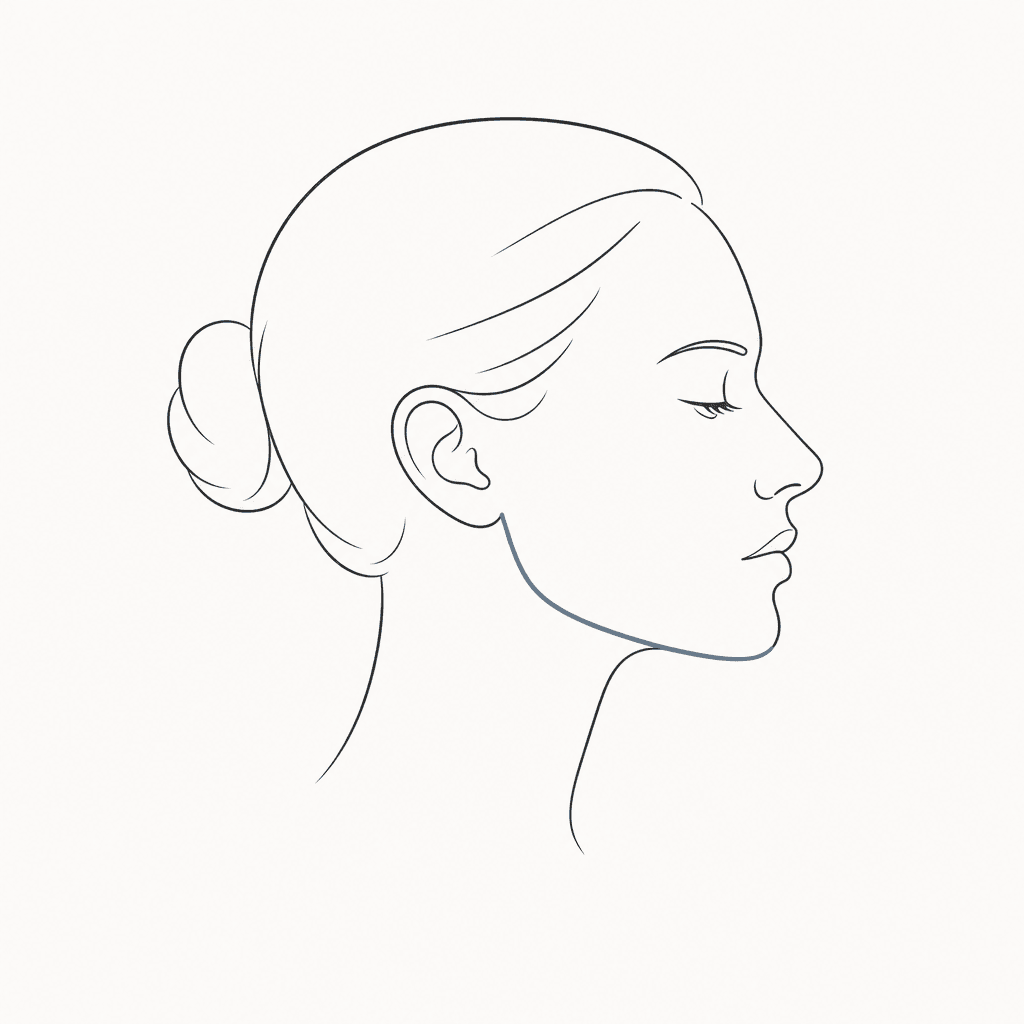
What it compares
The distance from the pupil line down to the mouth, set against the distance between the pupils. Dividing by interpupillary distance is what makes the result independent of image size.
Why there is no reference band
A band is a claim about a population. We could not find a published range for this measurement taken from photographs that we were willing to stand behind, so the page states that it has no reference band rather than borrowing a number from somewhere else. Printing one anyway would be the easier thing to do and the less honest one.
Check the camera before reading a change
Head pitch moves this number more than it moves most of the others here. Looking slightly up or slightly down between two photographs is enough to shift it. Before treating a difference as a change in your face, check that the camera sat at the same height both times.
The distance from the pupil line down to the mouth, expressed against the distance between the pupils.
How midface ratio is measured, and what it cannot tell youSources and editorial scope
Read the methods or service reference. This reference provides context for the topic; it does not validate every planning suggestion or establish a personal benefit from a haircut or assessment.
Published by FaceFluent, which offers the product described here. These guides are educational and editorial content, not individual advice from a named stylist or clinician. Read our editorial scope or report an error.
Try a haircut on your photo. On-device landmark annotations are optional and stay in this browser.
Try a haircut on my photo Try free face analysis on your device