Measurements · FaceFluent editorial ·
The oldest measurement here, and its classes
Facial index is the one measurement on our reference with a formal classification attached. The classes describe a shape. They do not rank it.
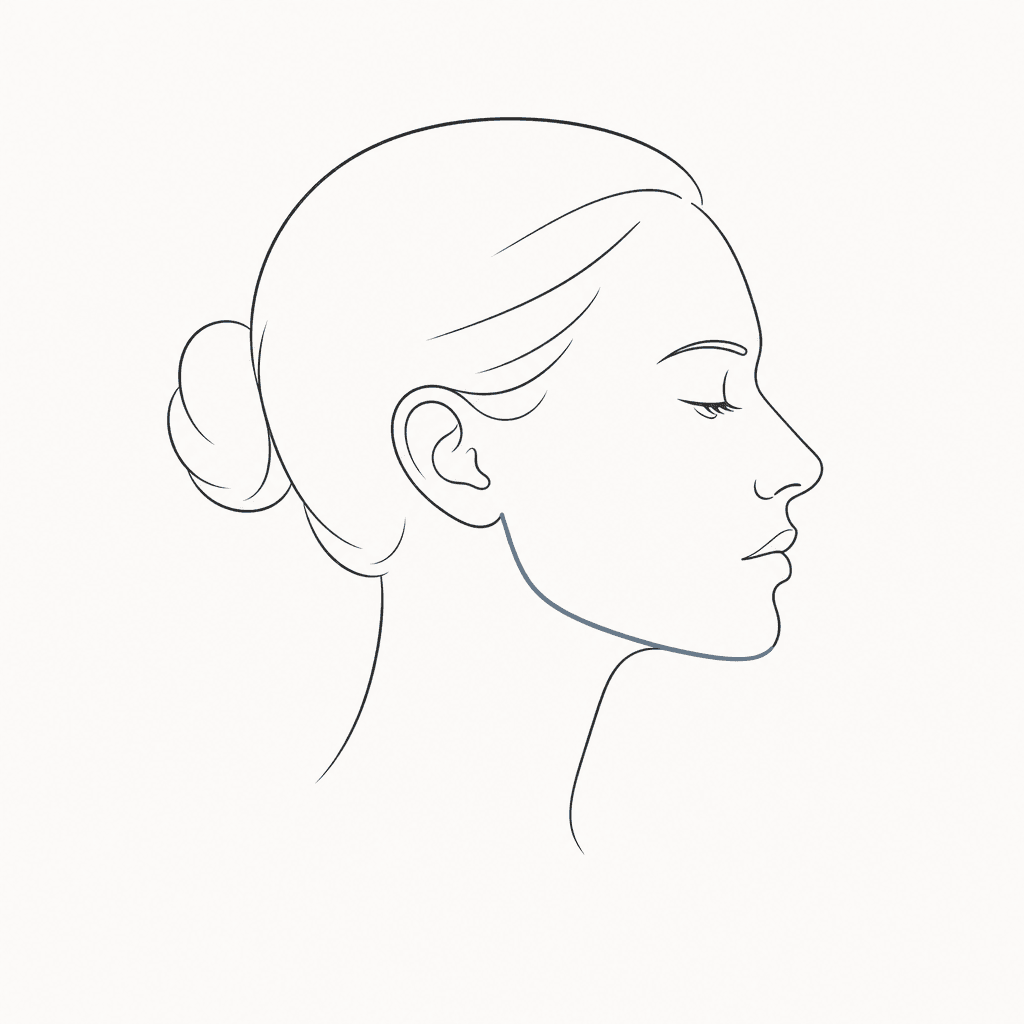
What it calculates
One hundred times the vertical distance from the bridge of the nose to the chin, divided by the width across the cheekbones. Multiplying by a hundred is why it reads as a percentage rather than a plain ratio.
The classes are conventions
The class names sound clinical, but the boundaries between them are divisions of the scale rather than natural joints in the population. A long face and a broad face are both ordinary. Our scanner reports no class, because assigning one would turn a description into a label.
What moves it, and what does not
Head pitch: a raised or lowered chin changes apparent height noticeably. Hairline visibility and a jaw hidden by hair or a collar do not affect it, which makes it one of the steadier measurements on the reference.
Face height from the bridge of the nose to the chin, as a percentage of cheekbone width. It is the oldest measurement on this list and the only one with a formal classification attached.
How facial index is measured, and what it cannot tell youReference and scope
Read the supporting methods or service reference. This guide provides educational context and planning suggestions. It is not a clinical assessment or a guaranteed-outcome claim.
See how an AI styling plan puts observations, options, and limits together.
Read the sample report