Face shape guide · By FaceFluent editorial · Published
Haircuts for oval faces: ideas for women
An oval face is a little longer than it is wide, with a jaw that narrows gently to the chin. Stylists often call it the easiest shape to cut for, which makes the real questions texture, upkeep and which feature you want on show. Here are eight references across lengths and textures, each with the reason behind it and a brief for your appointment.
What people mean by an oval face
- In a straight-on photo the face is longer than it is wide, though not by much, and the widest line is across the cheekbones.
- The forehead is slightly wider than the jaw, and the jaw narrows into a rounded chin without a sharp corner.
- No single feature dominates the outline: there is no strong angle at the jaw and no point at the chin.
- Many faces sit between shapes. If your jaw is fuller and the length and width look closer to equal, the round guide may be as useful as this one.
The rule stylists start from
With an oval face there is less to balance, so the usual rule is to keep the proportions visible rather than correct them: leave the face open somewhere, and avoid volume that only goes up or only goes out. That makes texture the deciding factor. A cut that works with your natural pattern holds its shape between appointments, whatever the length. None of this is a requirement; it is where stylists tend to start.
8 looks, and the reason behind each
Every look below is an original AI illustration of a fictional adult from our catalog, shown as an inspiration reference and not as a result. The reason given is the visible property stylists point to; whether it holds for you depends on your hair and is your stylist’s call.
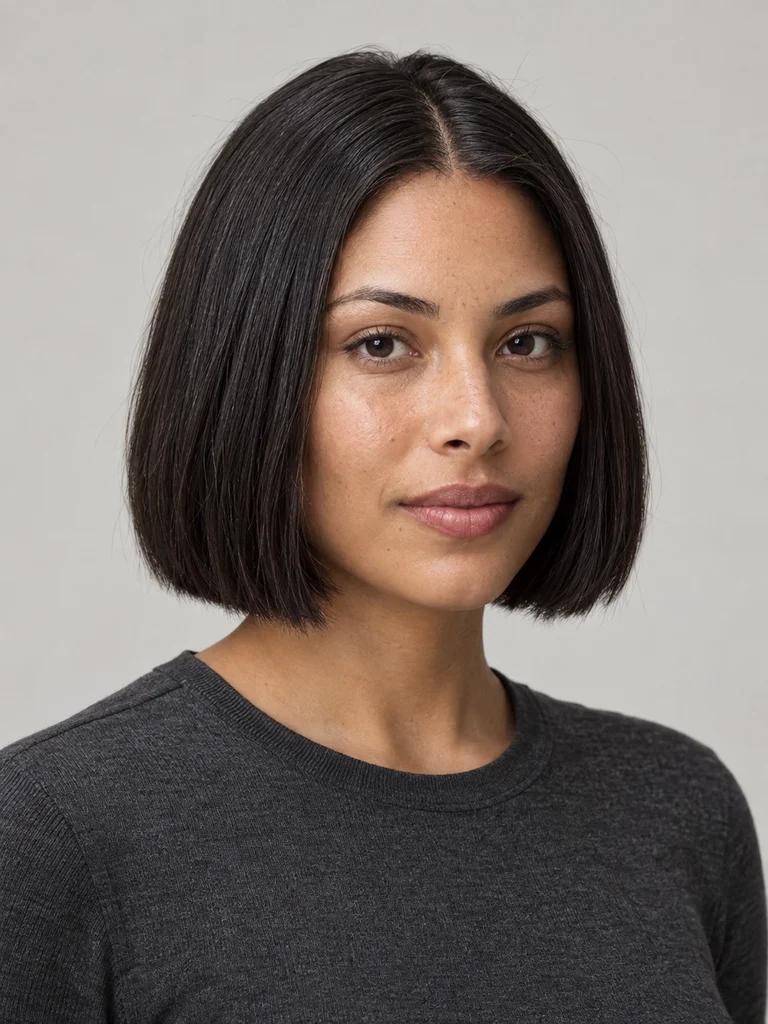
Blunt bob
A clean chin-length line shows where the jaw narrows, and an oval outline is balanced enough to carry a perimeter this strong without extra layering.
Ask for: Ask for a chin-length bob with a blunt perimeter and minimal visible layering. Agree on the dry length and discuss any internal weight adjustment before cutting.
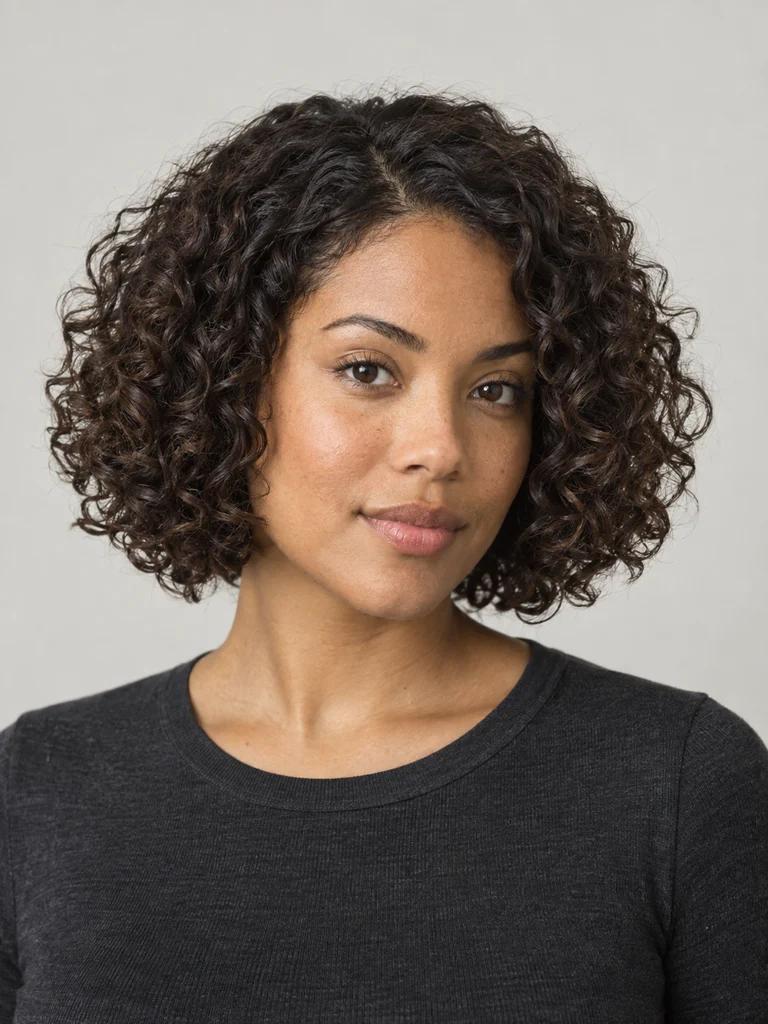
Curly bob
Jaw-length curls frame the lower face evenly, and because an oval outline needs no correction the bob can stay rounded instead of being shaped to lengthen.
Ask for: Ask for a bob that reaches the jaw in its dry, curled state, with layers balanced around the perimeter. Discuss shrinkage and your usual styling routine before setting the length.
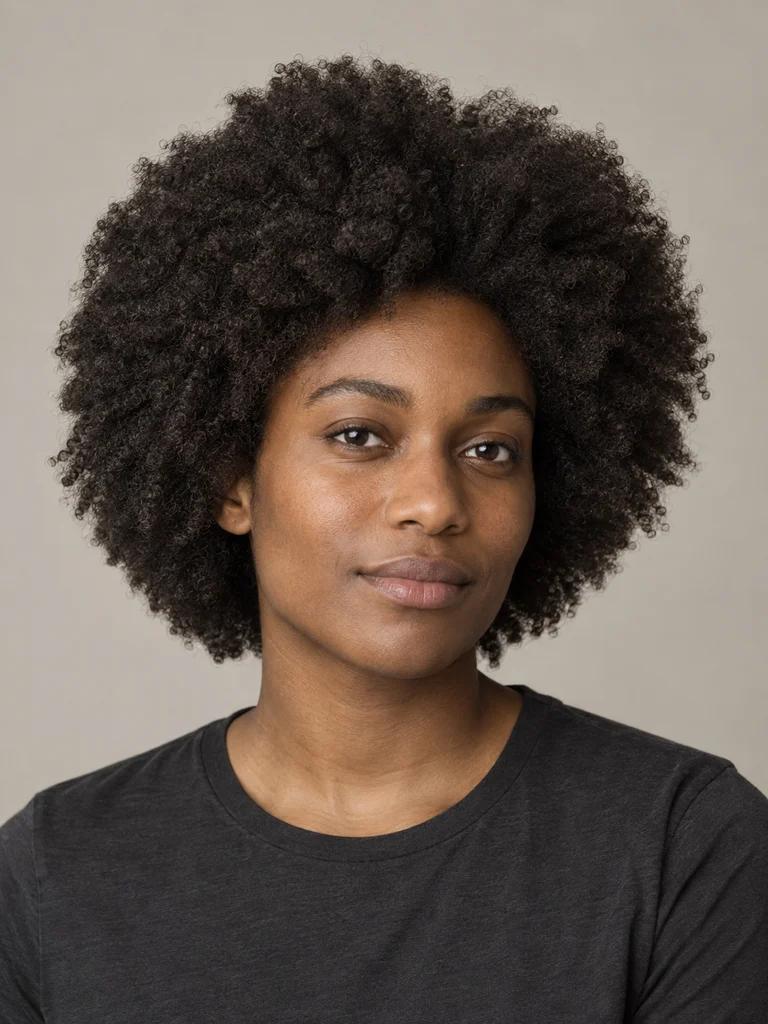
Rounded afro
An even halo repeats the soft oval outline at a larger scale, so the shape reads balanced from the front and the side.
Ask for: Ask for a rounded shape assessed in the way you usually wear your coils. Discuss shrinkage, desired volume and how much length to retain before shaping the outline.
See the rounded afro on your own photo before you book. AI previews require an account and photo consent.
Try this look on my photo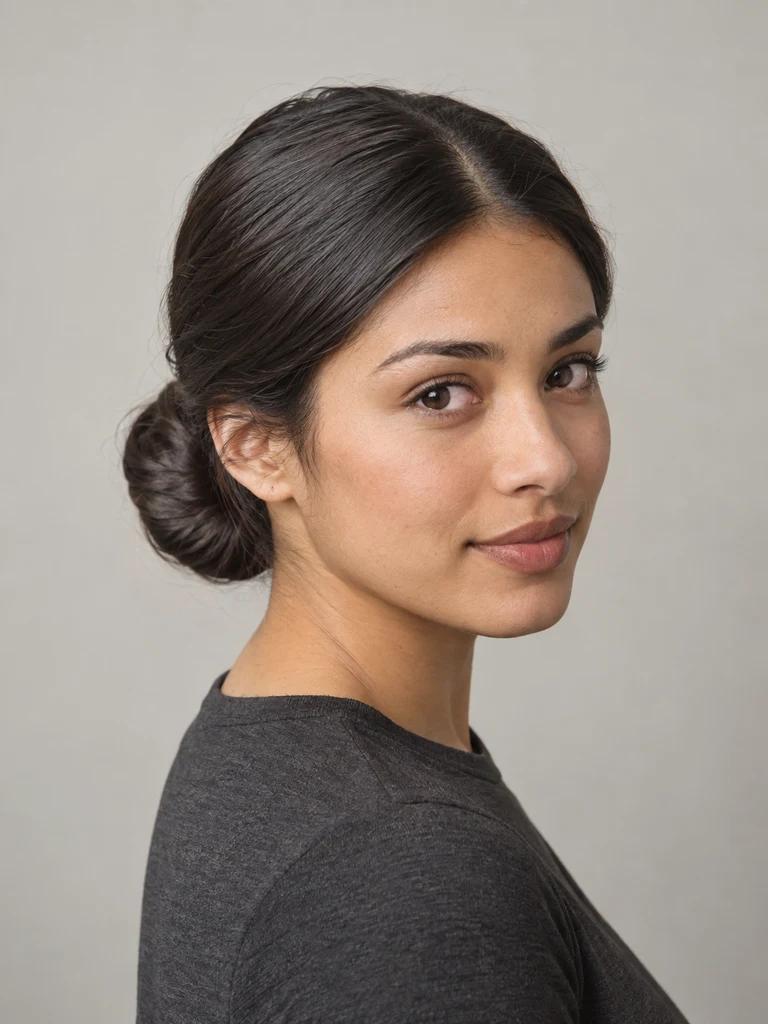
Sleek low bun
With the hair drawn back, the bun shows the whole outline of the face, which is why it is a common choice when the proportions are already even.
Ask for: Ask for a low bun with a smooth finish and a comfortable, low-tension hold. This is a styling finish, not a short cut: check that your underlying length can reach the nape before choosing it.
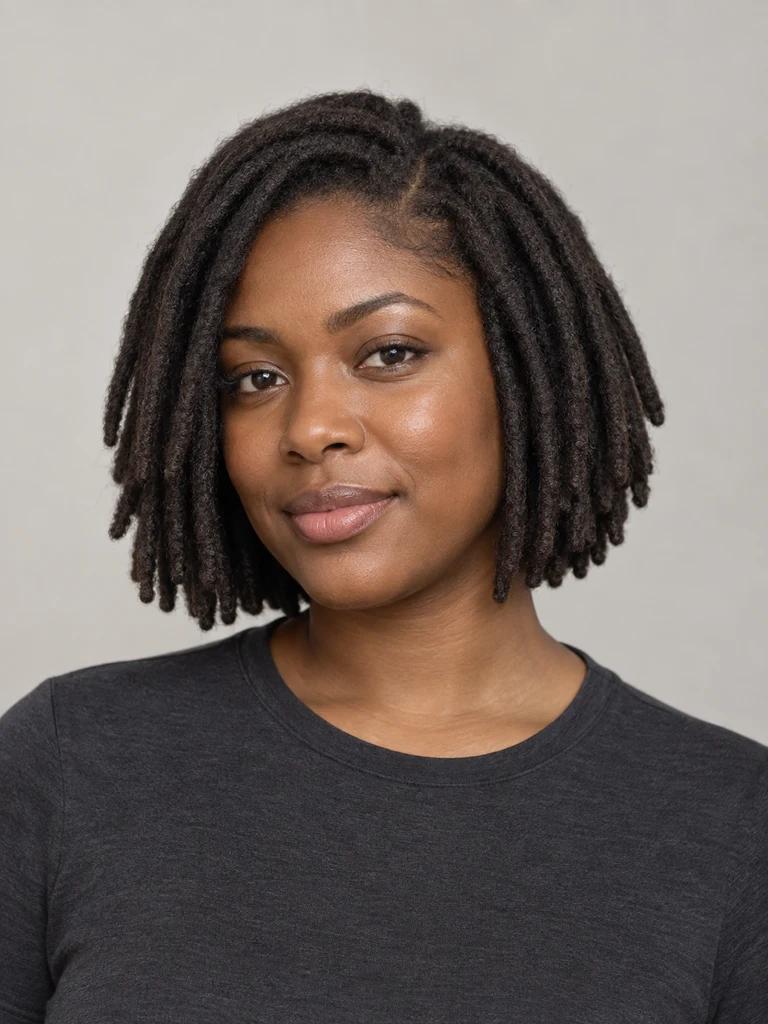
Loc bob
A jaw-length loc bob ends where an oval face narrows, drawing a clear frame around the chin.
Ask for: For existing locs, discuss a jaw-length bob with a loctician before cutting. If starting from loose hair, discuss the formation process, time and maintenance commitment; an illustration cannot show how your own locs will mature.
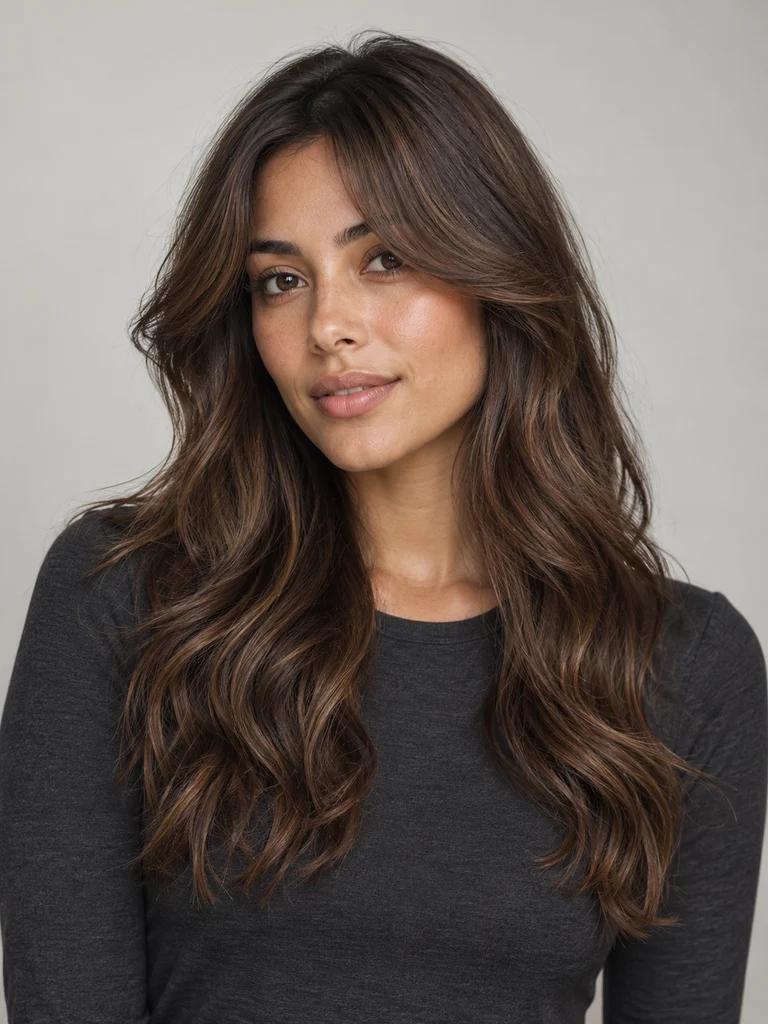
Curtain layers
A centre-parted fringe frames the cheekbones, the widest line of an oval face, and opens toward the eyes instead of covering the forehead.
Ask for: Keep the overall length past the shoulders and add a curtain fringe that blends into the front layers. Discuss the shortest face-framing point and how the fringe will fall without styling.
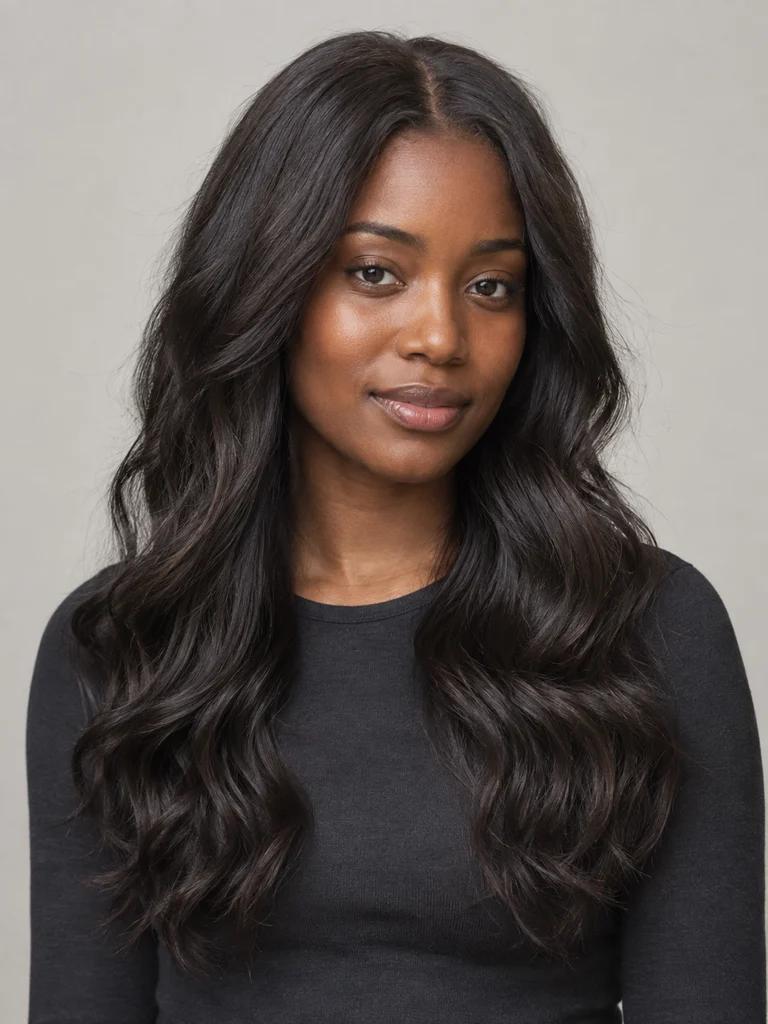
Long waves
An oval face can carry real length without the outline reading drawn down; the layers keep movement around the shoulders so the length does not hang flat.
Ask for: Ask for long layers that retain a full perimeter and encourage loose movement. Discuss whether the reference wave can come from your natural texture or would need styling.
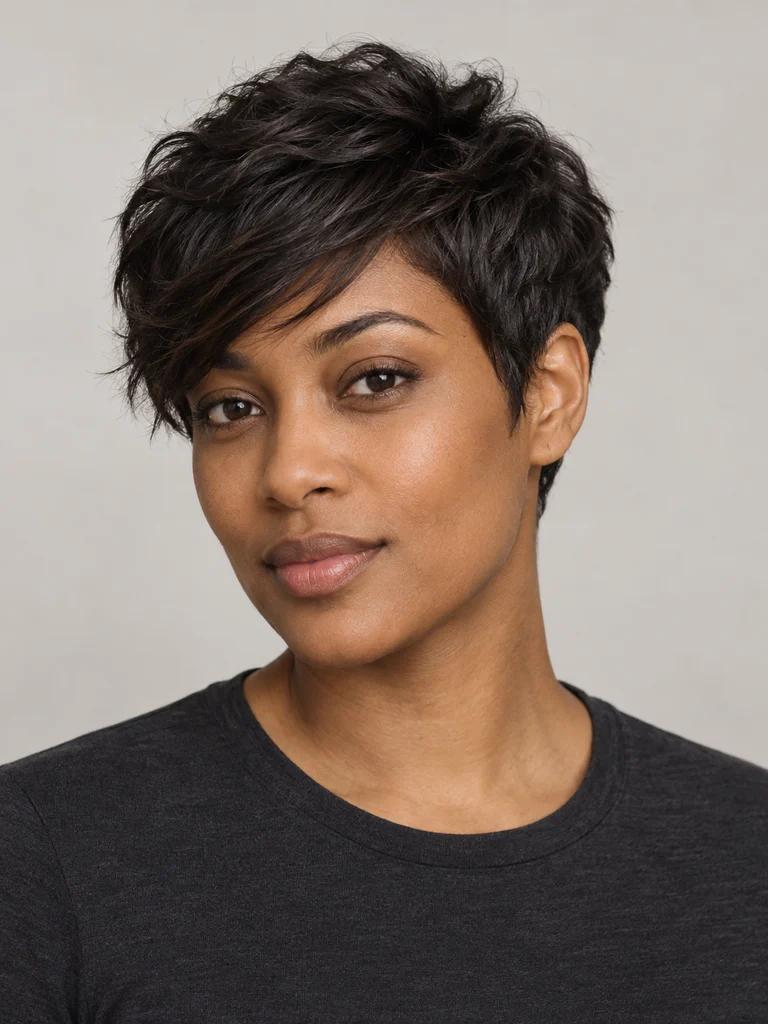
Textured pixie
A very short cut leaves nothing to hide behind, and with no angle to soften, an oval face is the shape stylists most often suggest for a first pixie.
Ask for: Ask for a softly tapered pixie with a longer, textured top. Decide together how much length to retain around the ears and across the fringe.
See the textured pixie on your own photo before you book. AI previews require an account and photo consent.
Try this look on my photoThree to compare first
| Look | Visible length | Hair textures | Upkeep |
|---|---|---|---|
| Blunt bob | Short | Straight, Wavy | Trim every six to eight weeks |
| Curly bob | Short | Curly | Curl routine, shrinkage check |
| Rounded afro | Medium | Coily | Shaping, moisture routine |
Cuts to think twice about
- A heavy fringe covering the whole forehead. It hides the top third of the face, so an oval outline reads shorter and rounder. A lighter or parted fringe keeps the proportion visible.
- Height piled only on top. Lift at the crown with nothing at the sides lengthens a face that is already slightly long. Some width or a softer crown balances it.
- Very long hair in one length with no layers. The weight pulls straight down and can make the face read longer and narrower. A few long layers or face-framing pieces change that.
Routine and upkeep
- When most cuts work, choose by your mornings. Ask how long each reference takes to style on an ordinary day and pick the one that fits.
- Texture decides how long a shape holds. Curls and coils should be cut and judged dry, in the way you usually wear them.
- Sleek buns depend on tension. Ask for a comfortable hold; tight styling at the hairline puts strain on it over time.
How to ask your stylist
Bring the brief from the look you choose, then settle these before the first cut:
- Which of these works with my natural texture without daily heat styling?
- Where should the fringe or the shortest layer sit so my face stays open?
- What will this length be when dry, and how will shrinkage change it?
- Which parts of this reference should we adapt rather than copy?
Questions people ask
Can an oval face wear any haircut?
Most cuts work, which is why stylists call it a flexible shape. The exceptions are styles that hide the face completely or add volume in only one direction. Texture and upkeep usually matter more than the shape.
Should I get a fringe with an oval face?
You can. A curtain or side-swept fringe keeps part of the forehead visible; a heavy straight fringe also works but makes the face read shorter. If you are unsure, try a clip-in fringe or style your hair forward for a day first.
Is short or long hair better for an oval face?
Neither. A pixie, a blunt bob and long layers all appear above because an oval outline does not need length added or taken away. Decide by how much time you want to spend styling.
Can I preview these on my own photo?
Yes. After sign-in and photo consent, FaceFluent creates an AI preview of a chosen look on your front photo. It is an illustration to discuss with your stylist, not a prediction of the result.
Other guides
- Haircuts for round faces: ideas for men
- Haircuts for round faces: ideas for women
- Haircuts for square faces: ideas for women
- Haircuts for heart-shaped faces: ideas for women
Sources and editorial scope
This guide summarises the reasoning stylists commonly give for an oval face. It is educational and editorial content published by FaceFluent, which offers the product described here, not individual advice from a named stylist. FaceFluent does not classify face shapes or calculate scores; the mirror test on the face shape hub is yours to make. Read our editorial scope or report an error.
Try any of these on your own photo before your appointment. AI previews require an account and photo consent; local face analysis is optional.
Try a haircut on my photo Prepare a free appointment brief