Face shape guide · By FaceFluent editorial · Published
Haircuts for round faces: ideas for women
A round face has soft width at the cheeks and a curved jaw. The cuts stylists reach for usually add length, keep layers away from the cheekbones and let a fringe sit at an angle. Here are nine references with the reason behind each one and a brief to take to your appointment.
What people mean by a round face
- The width at the cheekbones and the length of the face look close to equal when you face the camera straight on.
- The jaw curves into the chin without a visible corner.
- The forehead is often rounded at the hairline, so centre parts and curtain fringes tend to sit naturally.
- Plenty of faces are a blend. If your jaw is defined, the square guide may be as useful as this one.
The rule stylists start from
The usual rule is length and angle. Hair that falls below the chin lengthens the visible face; layers that start below the cheekbone keep the widest point from gaining volume; a fringe cut at an angle or parted in the centre adds a diagonal line. These are starting points, not rules about what you may wear. Texture, density and how much styling you want should change the plan.
9 looks, and the reason behind each
Every look below is an original AI illustration of a fictional adult from our catalog, shown as an inspiration reference and not as a result. The reason given is the visible property stylists point to; whether it holds for you depends on your hair and is your stylist’s call.
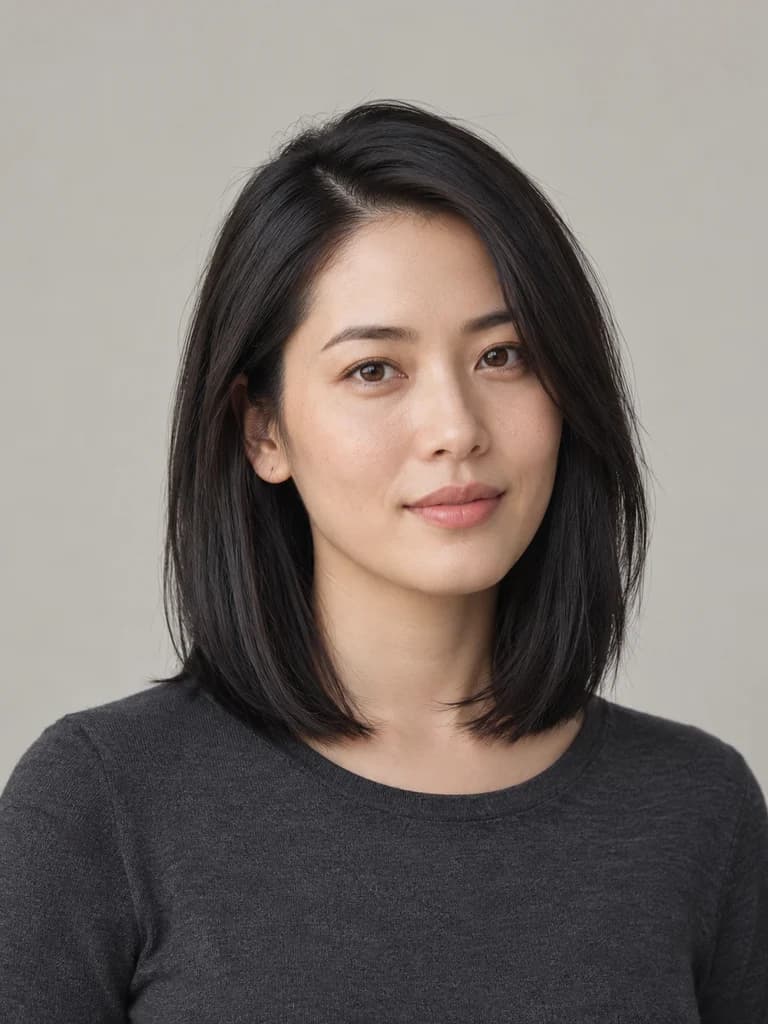
Collarbone lob
The perimeter lands below the chin, so the longest line in the silhouette runs past the widest part of the face.
Ask for: Ask for a long bob that rests at the collarbone when dry, with a soft perimeter. Discuss subtle internal layers and whether you want enough length to tie it back.
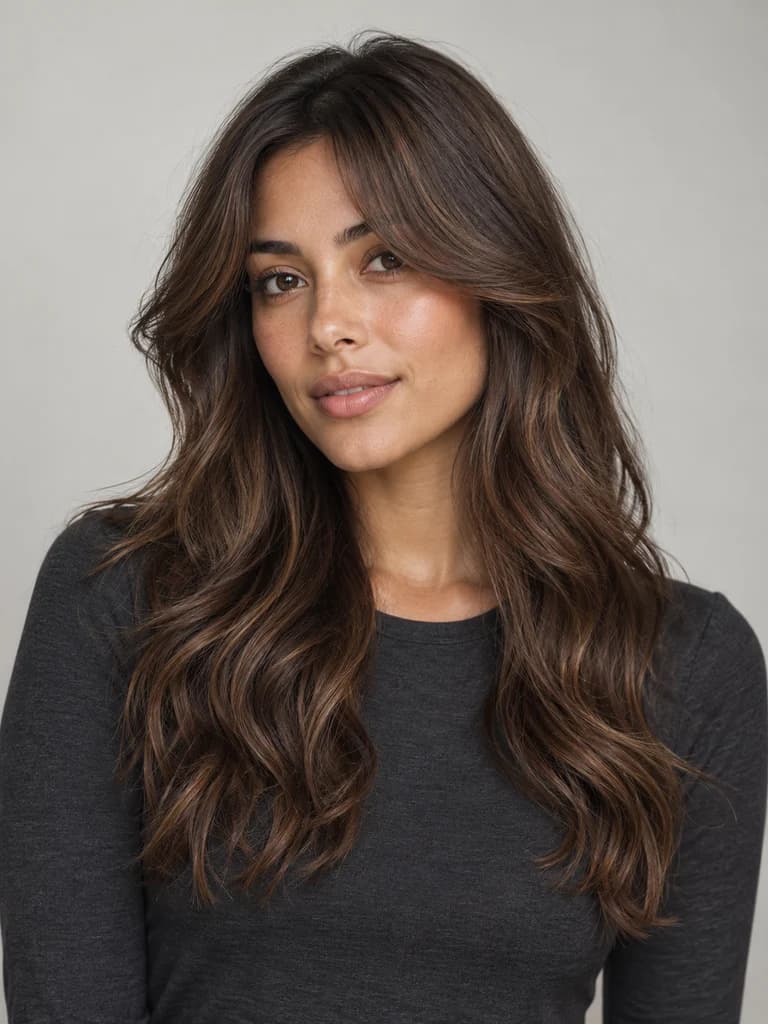
Curtain layers
A curtain fringe parts in the centre and falls on a diagonal, breaking the curve of a round outline where a straight fringe would repeat it.
Ask for: Keep the overall length past the shoulders and add a curtain fringe that blends into the front layers. Discuss the shortest face-framing point and how the fringe will fall without styling.
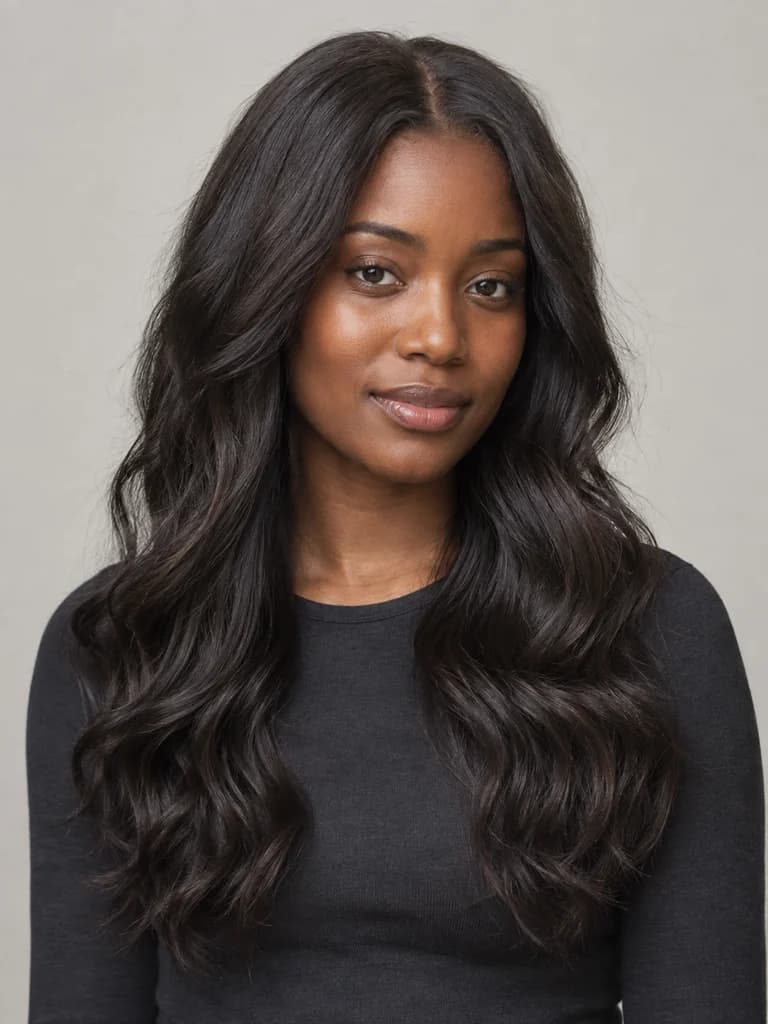
Long waves
Long waves carry the weight well below the jaw, and the layers add movement without volume at the cheeks.
Ask for: Ask for long layers that retain a full perimeter and encourage loose movement. Discuss whether the reference wave can come from your natural texture or would need styling.
See the long waves on your own photo before you book. AI previews require an account and photo consent.
Try this look on my photo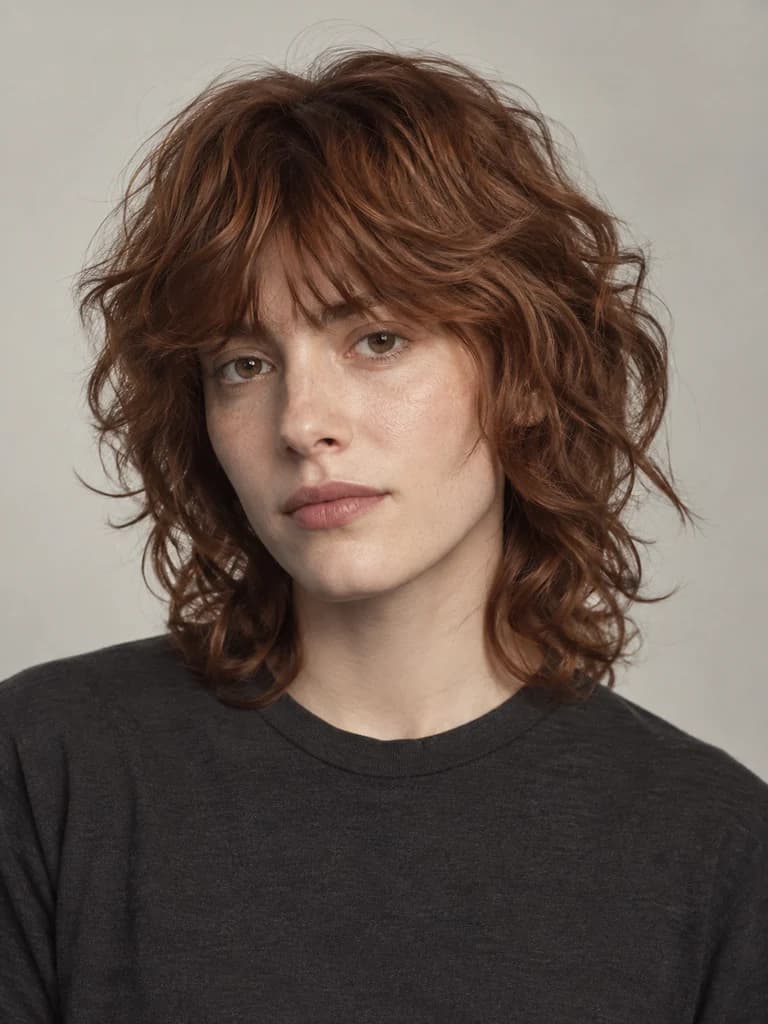
Soft shag
The shorter crown layers add height while the retained perimeter keeps length, which is the combination stylists often describe for a round face.
Ask for: Ask for a neck-to-shoulder-length shag with connected layers, a soft fringe and a retained perimeter. Discuss how short the crown layers should be before removing weight.
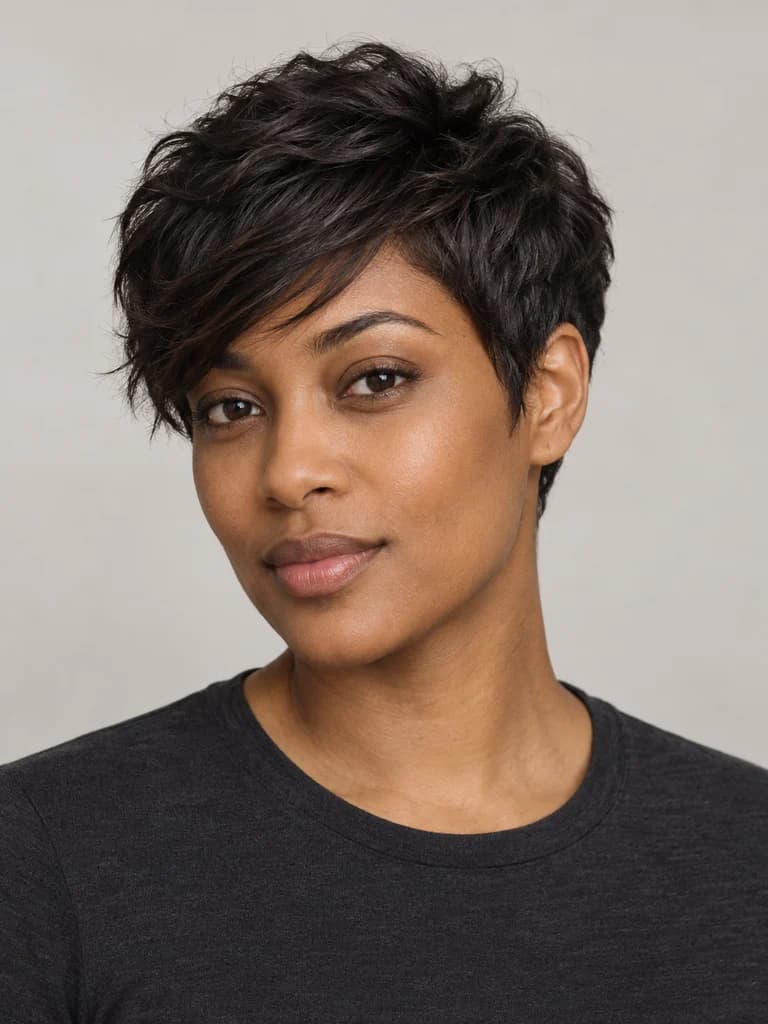
Textured pixie
A longer, textured top gives height and the tapered sides stay close, so a short cut still creates vertical contrast.
Ask for: Ask for a softly tapered pixie with a longer, textured top. Decide together how much length to retain around the ears and across the fringe.
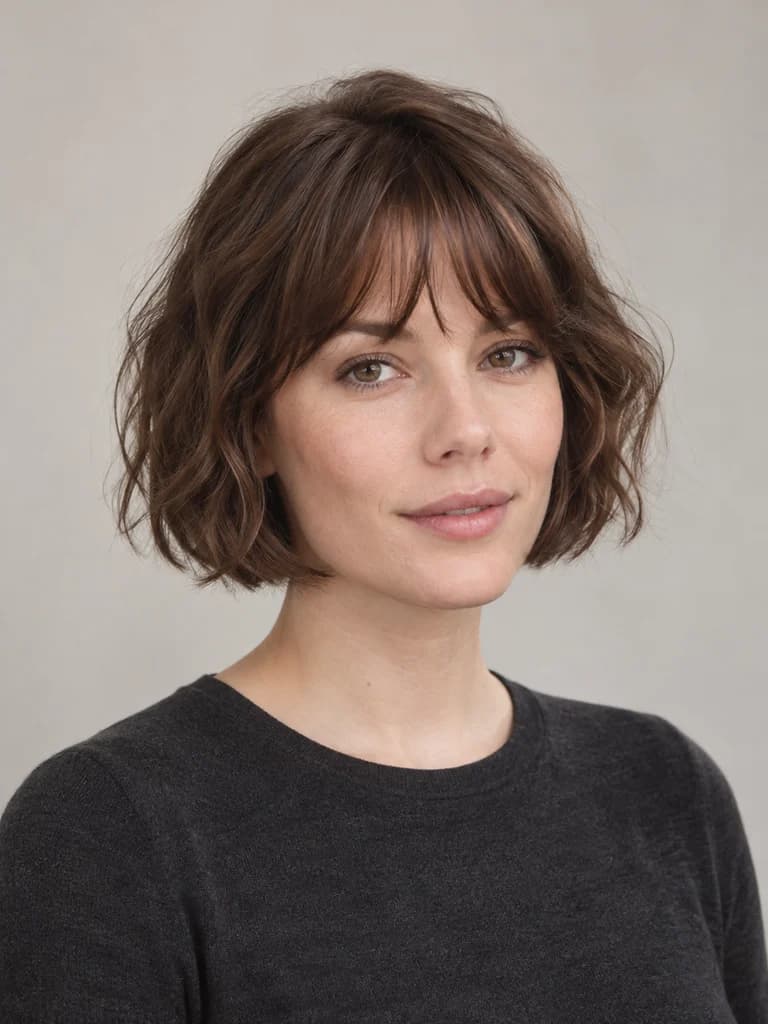
French bob
This one sits at the cheek-to-jaw line, which many guides warn against. It works when the fringe is soft and the ends are relaxed rather than blunt; ask for both.
Ask for: Ask for a short bob between cheek and jaw with a soft fringe and relaxed ends. Set the fringe length with your natural fall and any cowlicks in mind.
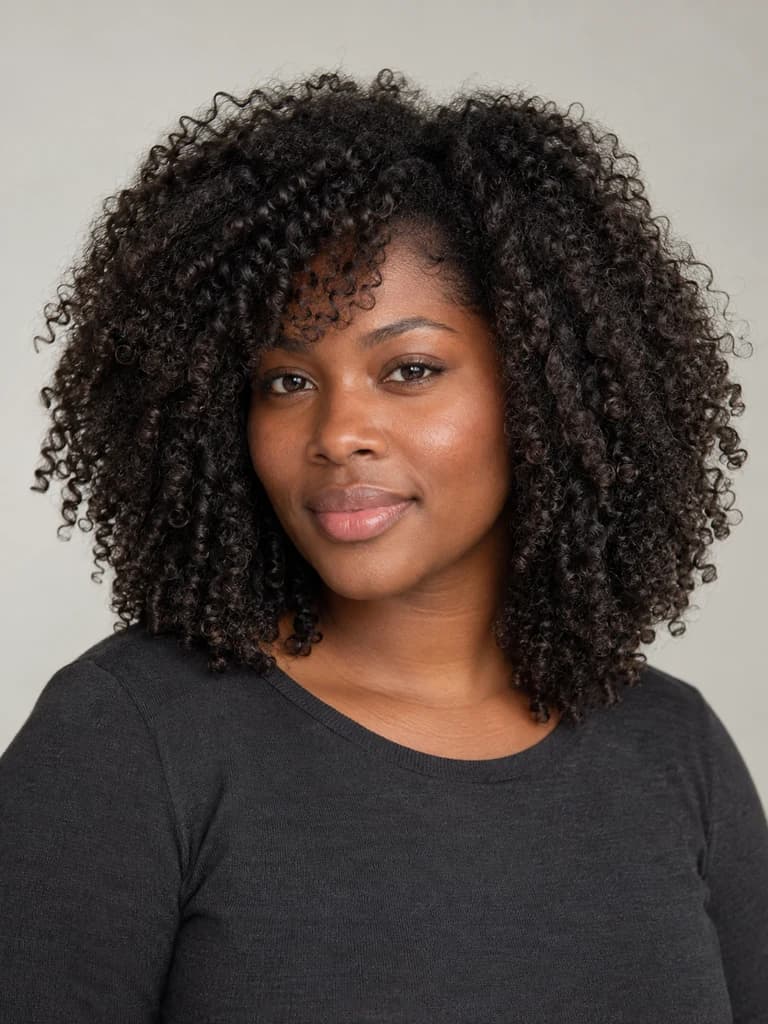
Shoulder curl layers
Curls that rest at the shoulder keep fullness at the perimeter and away from the cheekbones, so the volume reads as length.
Ask for: Ask for layers that reach the shoulders when dry, keeping fullness at the perimeter. Assess shrinkage in your usual curl or coil pattern before agreeing on the shortest layer.
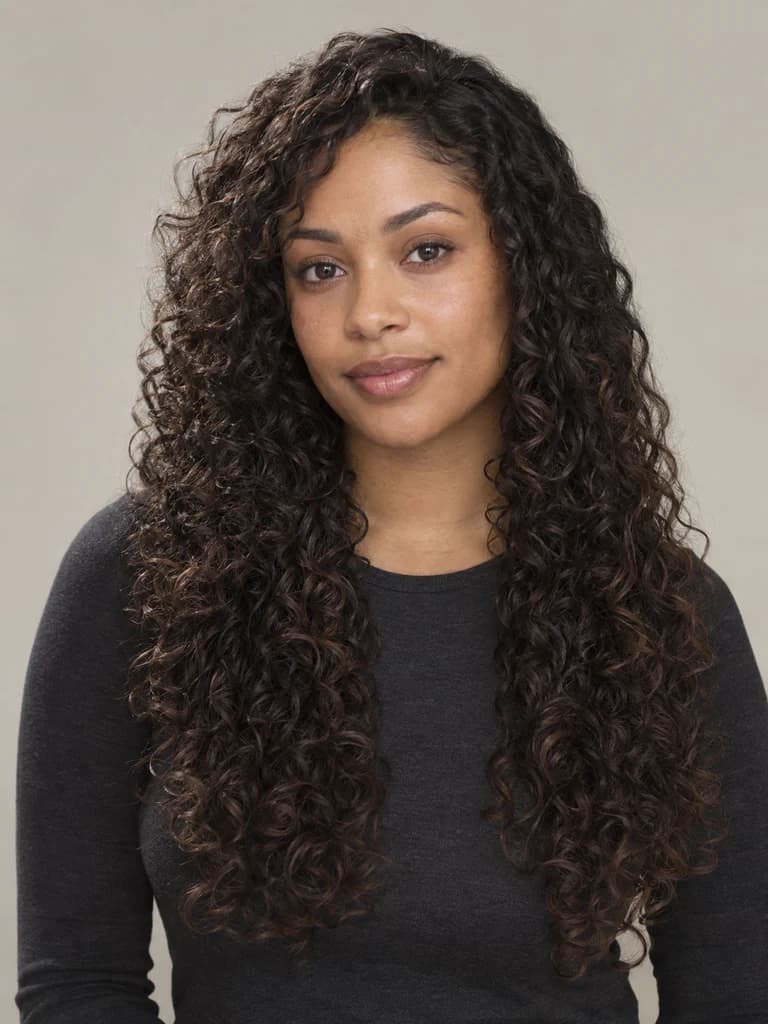
Long curl layers
Connected layers through long curls keep the crown lifted and the ends full, giving the face a longer frame.
Ask for: Retain length past the shoulders in the dry curled state and connect the layers without thinning the perimeter. Discuss shrinkage, tangling and how much volume you want at the crown.
See the long curl layers on your own photo before you book. AI previews require an account and photo consent.
Try this look on my photo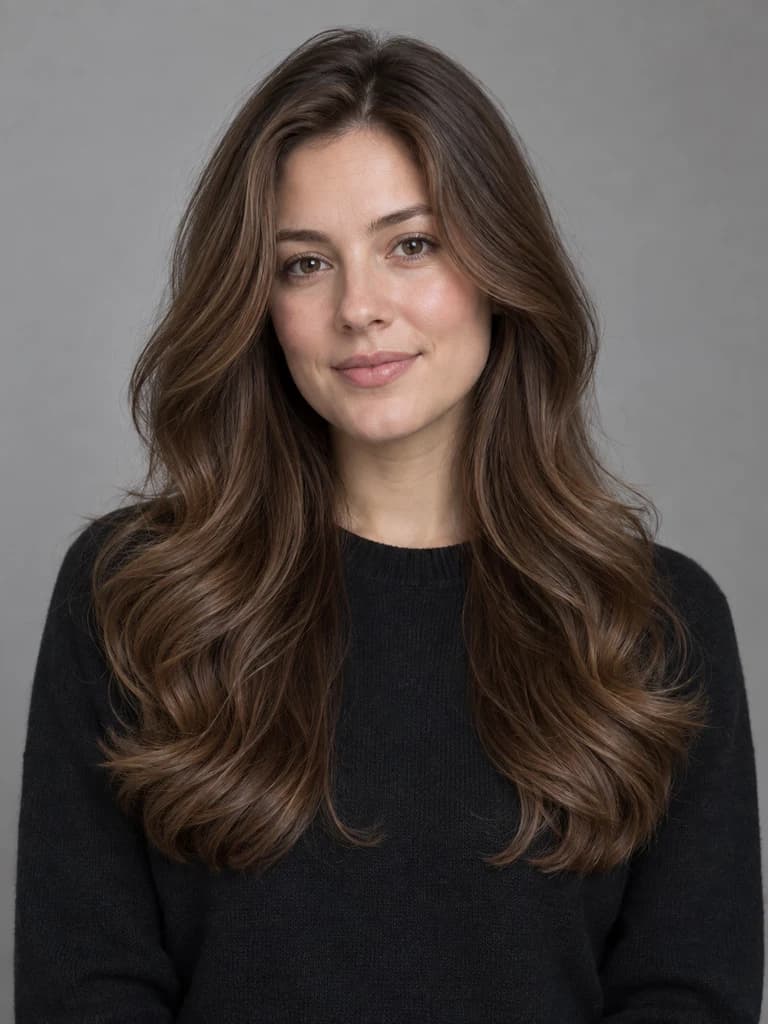
Soft blowout
A styling finish rather than a cut: root lift adds height and the curved ends sit below the chin, so you can test the effect without cutting anything.
Ask for: Ask for a soft blowout with gentle root lift and curved ends on hair that falls past the shoulders. Discuss your existing length and how to achieve the finish with your texture; the reference does not require a new cut.
Three to compare first
| Look | Visible length | Hair textures | Upkeep |
|---|---|---|---|
| Collarbone lob | Medium | Straight, Wavy, Curly | Trim every eight to ten weeks |
| Curtain layers | Long | Straight, Wavy | Fringe trims between cuts |
| Long waves | Long | Wavy | Drying time, detangling |
Cuts to think twice about
- A blunt chin-length bob. The heaviest line lands exactly at the widest part of the face. Adding length or soft layers changes that quickly.
- A straight, heavy fringe. A level line across the forehead shortens the visible face. An angled or curtain fringe keeps coverage without that effect.
- Volume that peaks at the cheekbones. Rounded layers that are fullest at cheek level repeat the outline of a round face.
Routine and upkeep
- Length is the easiest lever and the slowest to undo. If you are between a lob and a bob, ask for the longer one first.
- A curtain fringe needs its own drying routine. Decide whether you want that before choosing it.
- Shoulder-length hair flips at the ends when it touches the shoulder. Wear the movement or ask for a length just above or below it.
How to ask your stylist
Bring the brief from the look you choose, then settle these before the first cut:
- Where should the shortest layer start so it stays below my cheekbones?
- How will this fringe fall without styling, and how often will it need a trim?
- What length will this be when dry, and how will my texture change it?
- Which parts of this reference should we adapt rather than copy?
Questions people ask
Can a round face wear a bob?
Yes. The usual advice is to keep it below the chin, add soft layers or an angled fringe, and avoid a blunt line at cheek level. The collarbone lob and the French bob above show two ways to do that.
Is a centre part or a side part better for a round face?
A centre part adds a vertical line; a deep side part adds a diagonal one. Both create contrast with a curved outline. Try each in front of a mirror before cutting.
Does short hair suit a round face?
Short cuts with height on top and close sides, like a textured pixie, create the same contrast as long hair does. The thing to avoid is volume at the cheeks, not short length.
Can I preview these on my own photo?
Yes. After sign-in and photo consent, FaceFluent creates an AI preview of a chosen look on your front photo. It is an illustration to discuss with your stylist, not a prediction of the result.
Other guides
Sources and editorial scope
This guide summarises the reasoning stylists commonly give for a round face. It is educational and editorial content published by FaceFluent, which offers the product described here, not individual advice from a named stylist. FaceFluent does not classify face shapes or calculate scores; the mirror test on the face shape hub is yours to make. Read our editorial scope or report an error.
Try any of these on your own photo before your appointment. AI previews require an account and photo consent; local face analysis is optional.
Try a haircut on my photo Prepare a free appointment brief