Measurements · FaceFluent editorial ·
A canon that most faces do not meet
A Renaissance convention holds that the nose should be exactly as wide as the gap between the eyes. When somebody finally measured it, it held in a minority of people.
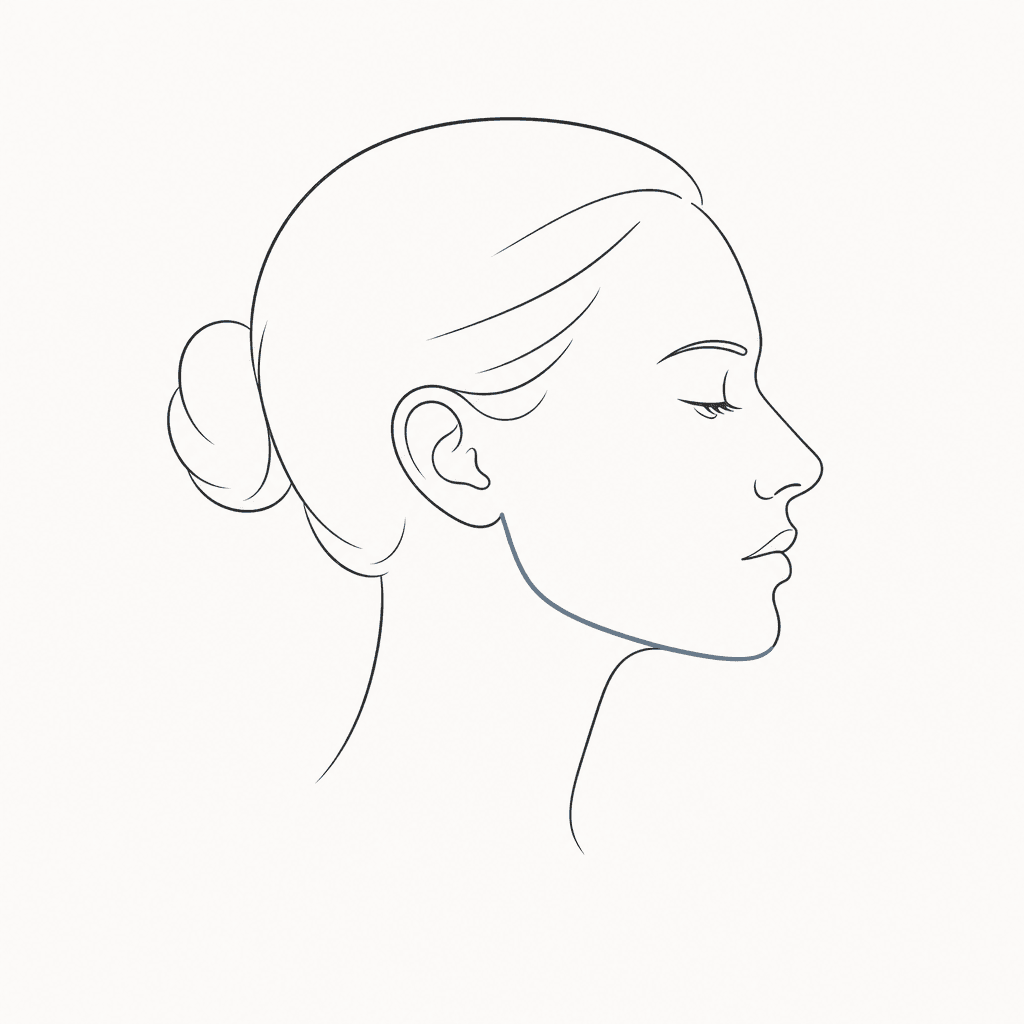
What the convention claims
That the width of the nose at the nostrils equals the distance between the inner corners of the eyes. It is a construction rule for drawing a face, not a finding about how faces are distributed.
What the measurements found
Farkas and colleagues measured 153 young adults against nine of these neoclassical canons. This one held in roughly 40 per cent of them, the best result of the nine and still a minority. A later replication in a different population found the same pattern. A face that differs from the canon is describing the reach of the canon, not a fault of its own.
Expression and lens move it
Smiling widens the nostrils. Head turn and lens distortion both affect nose width more than they affect eye spacing, so the ratio drifts with how the photograph was taken rather than with anything about the face.
The width of the nose at the nostrils, divided by the gap between the inner corners of the eyes. The Renaissance canon holds that the two should be equal.
How nose width to eye spacing is measured, and what it cannot tell youReference and scope
Read the supporting methods or service reference. This guide provides educational context and planning suggestions. It is not a clinical assessment or a guaranteed-outcome claim.
See how an AI styling plan puts observations, options, and limits together.
Read the sample report