Measurements · FaceFluent editorial ·
Mouth width, nose width, and the number one and a half
Another drawing convention with a figure attached. The figure came from illustration, not from measuring people.
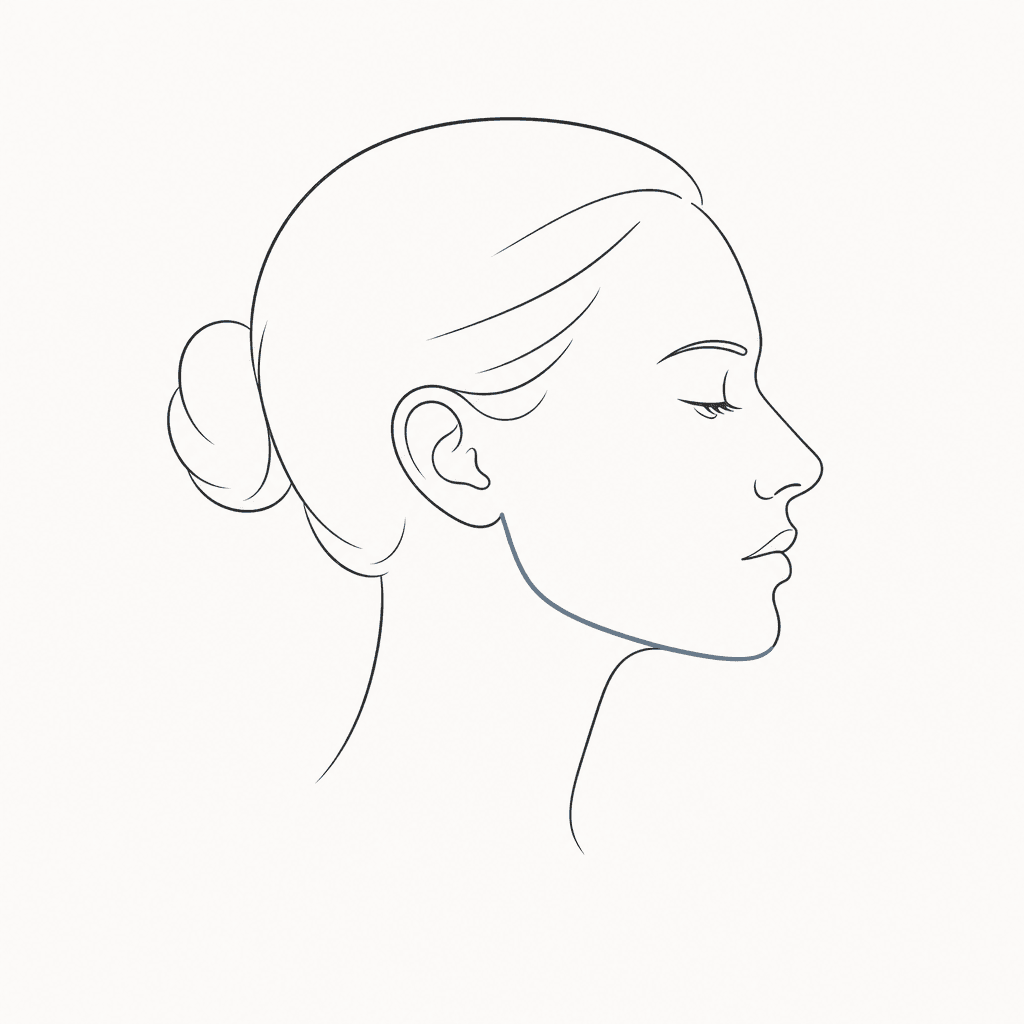
Where the figure comes from
The canon puts mouth width at roughly one and a half times nose width. Like the other canons it is an aid for constructing a face on paper, and it was in use long before anyone checked it against a population.
Expression decides the answer
A closed neutral mouth and a slight smile give different answers on the same face in the same minute. That makes this ratio a description of a moment as much as of a face, which is worth knowing before comparing two photographs.
What a difference establishes
Nothing about whether a mouth is too wide or too narrow. The 1985 survey that tested these canons found the horizontal ones matched a minority of real faces, so departing from the convention is the ordinary case rather than the exception.
The width of the mouth divided by the width of the nose. The canon sets it at roughly one and a half.
How mouth width to nose width is measured, and what it cannot tell youReference and scope
Read the supporting methods or service reference. This guide provides educational context and planning suggestions. It is not a clinical assessment or a guaranteed-outcome claim.
See how an AI styling plan puts observations, options, and limits together.
Read the sample report