Measurements · By FaceFluent editorial · Published
Reading jaw and cheek proportions
A width ratio gives one description of an image. Styling decisions need more context.
Know what is measured
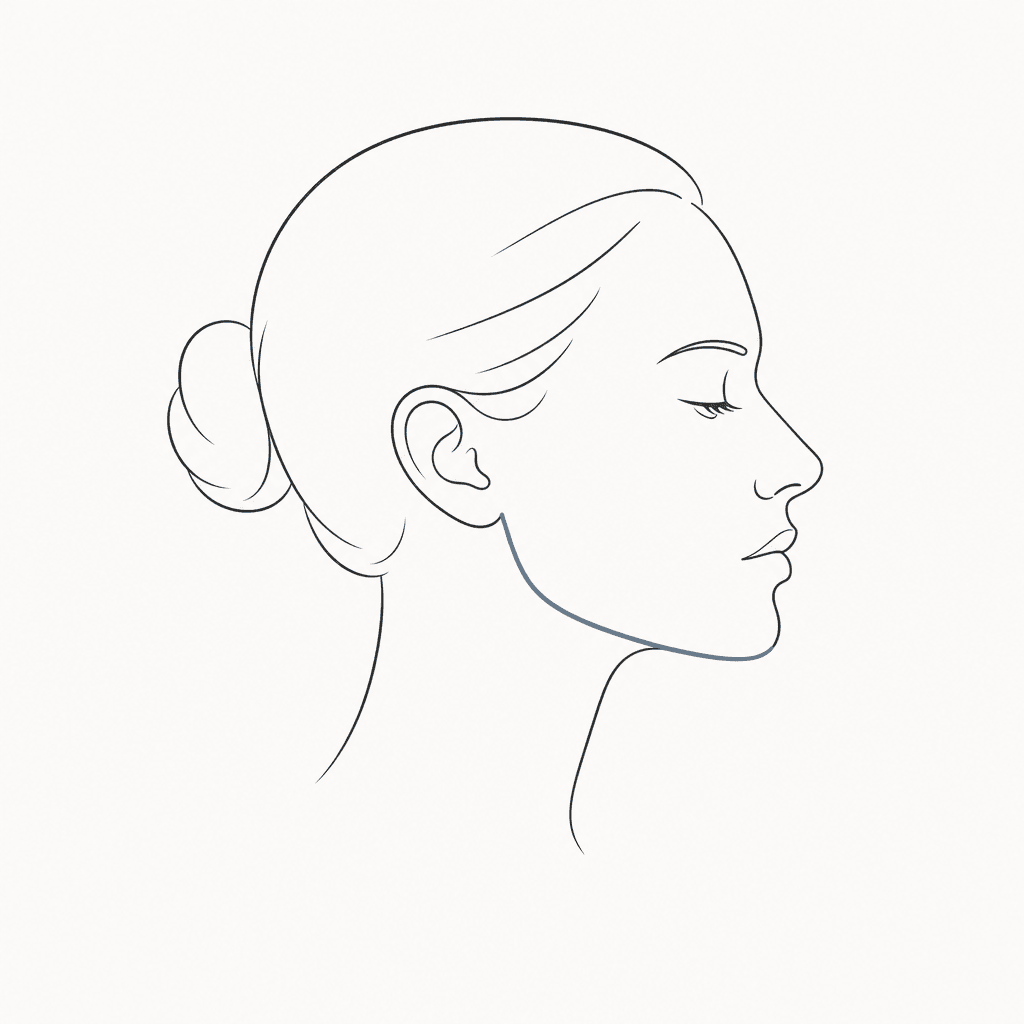
The preview compares distances between selected jaw and cheek landmarks. Landmark locations are estimates. A two-dimensional ratio does not isolate bone structure from the appearance of other facial tissues.
Keep comparisons modest
Use similar photo conditions before comparing two results. Changes in pose or expression can affect visible contours and landmark placement.
Return to the decision
If you are choosing a hairstyle or grooming approach, start with what you like, your maintenance tolerance, and a reversible experiment. Do not interpret the ratio as an instruction to change weight or seek a procedure.
The width of the jaw at the angle of the mandible, divided by the width across the cheekbones. Lower values read as a tapered face, higher values as a squarer one.
How jaw width to cheekbone width is measured, and what it cannot tell youSources and editorial scope
Read the methods or service reference. This reference provides context for the topic; it does not validate every planning suggestion or establish a personal benefit from a haircut or assessment.
Published by FaceFluent, which offers the product described here. These guides are educational and editorial content, not individual advice from a named stylist or clinician. Read our editorial scope or report an error.
Try a haircut on your photo. On-device landmark annotations are optional and stay in this browser.
Try a haircut on my photo Try free face analysis on your device