Measurements · By FaceFluent editorial · Published · Updated
What canthal tilt describes
Canthal tilt is an angle between estimated eye-corner landmarks. It does not summarize a face.
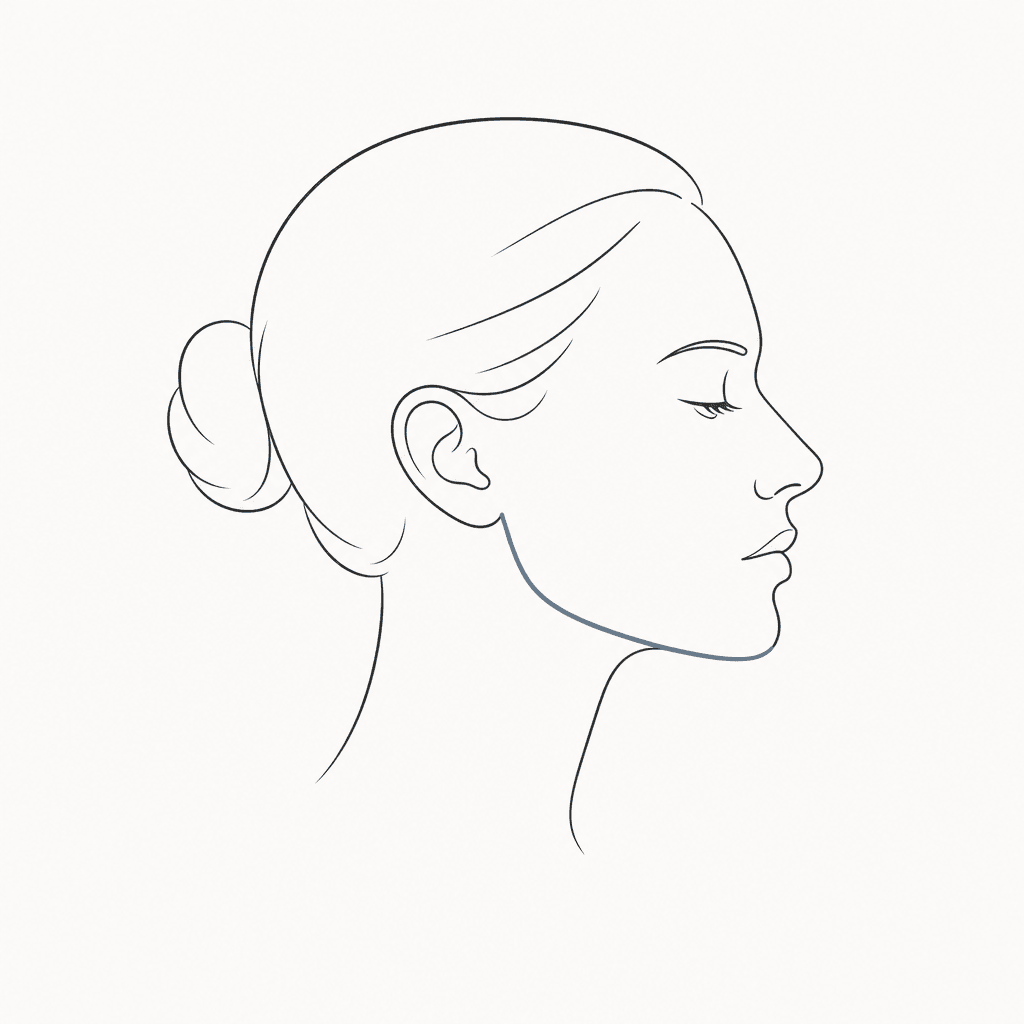
An estimate from an image
FaceFluent’s preview uses detected inner and outer eye-corner points and corrects for estimated head roll. The result still depends on the landmarks and the photograph.
Avoid turning a description into a goal
An angle does not reveal your preferences, your health, or whether any change would improve your life. A universal beauty target would overstate what this calculation can support.
Ask about usefulness
For an ordinary grooming or styling decision, your goals and what you find comfortable may be more useful than an angle. FaceFluent does not provide surgical advice about the eye area.
The angle of the line joining the inner and outer corner of one eye, read against the horizontal. Positive means the outer corner sits higher than the inner corner; negative means it sits lower.
How canthal tilt is measured, and what it cannot tell youSources and editorial scope
Read the methods or service reference. This reference provides context for the topic; it does not validate every planning suggestion or establish a personal benefit from a haircut or assessment.
Published by FaceFluent, which offers the product described here. These guides are educational and editorial content, not individual advice from a named stylist or clinician. Read our editorial scope or report an error.
Try a haircut on your photo. On-device landmark annotations are optional and stay in this browser.
Try a haircut on my photo Try free face analysis on your device